Introduction
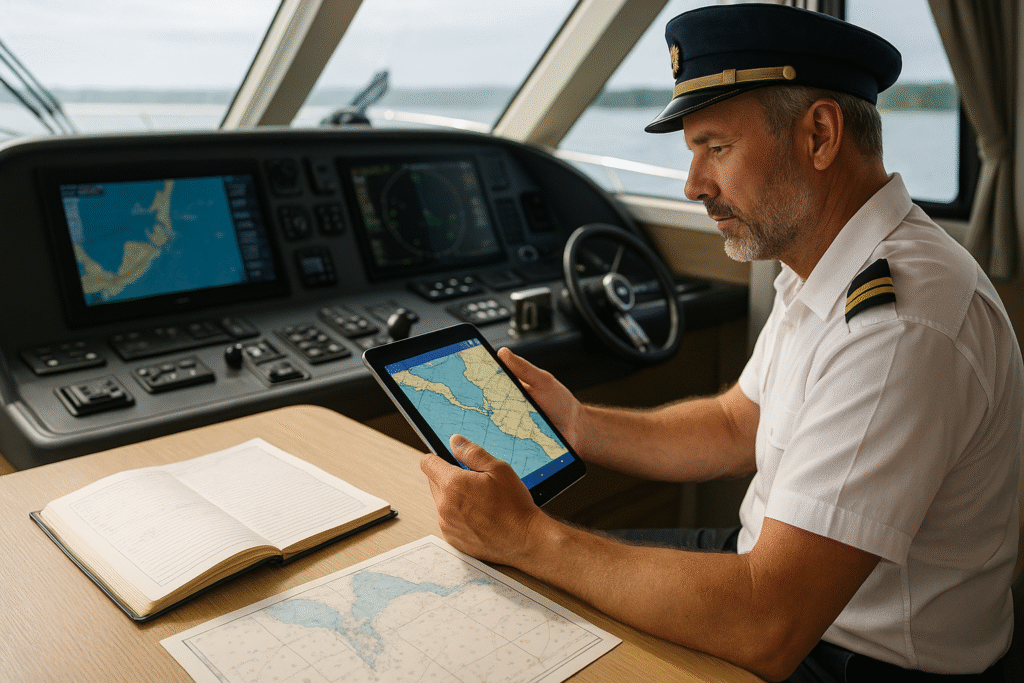
For decades, paper ruled onboard: manual logbooks, printed charts, and binders full of inventory lists. But the nautical sector has evolved. Today, digitizing your vessel is key to sailing safely, reducing costs, and increasing your boat or fleet’s value.
What does digitizing a boat mean?
It’s not just about installing a plotter. It’s about integrating technology for complete vessel management: navigation, maintenance, crew, inventory, and documentation.
Examples of digitalization:
Electronic charts with automatic updates.
Digital logbooks synced to the cloud.
Charter platforms with online bookings and digital check-ins.
Predictive maintenance systems with real-time alerts.
Digital management of certificates, insurance, and inspections.
Main benefits
1. More safety → updated weather and routing alerts.
2. Maintenance savings → sensors and predictive alerts.
3. Simplified management → all in one app.
4. Higher market value → digitized boats sell and charter better.
5. Sustainability → less paper, more ocean.
Steps to digitize your vessel
1. Assess your real needs (navigation only or full management).
2. Choose scalable nautical software.
3. Migrate logbooks, certificates, and data to the cloud.
4. Train your crew for proper use.
5. Review and update systems regularly.
FAQs
Do I need internet onboard?
Not always: most systems work offline and sync once connected.
Is digitizing expensive?
There are solutions for every budget: from free apps to professional systems.
What about my paper logbook?
You can scan and keep it as backup.
Conclusion
Digitalization doesn’t replace seamanship — it enhances it. Moving from paper to integrated software is the decisive step toward safer sailing and efficient management.
 At DigitalSailing.es we help you digitize your vessel with a free demo.